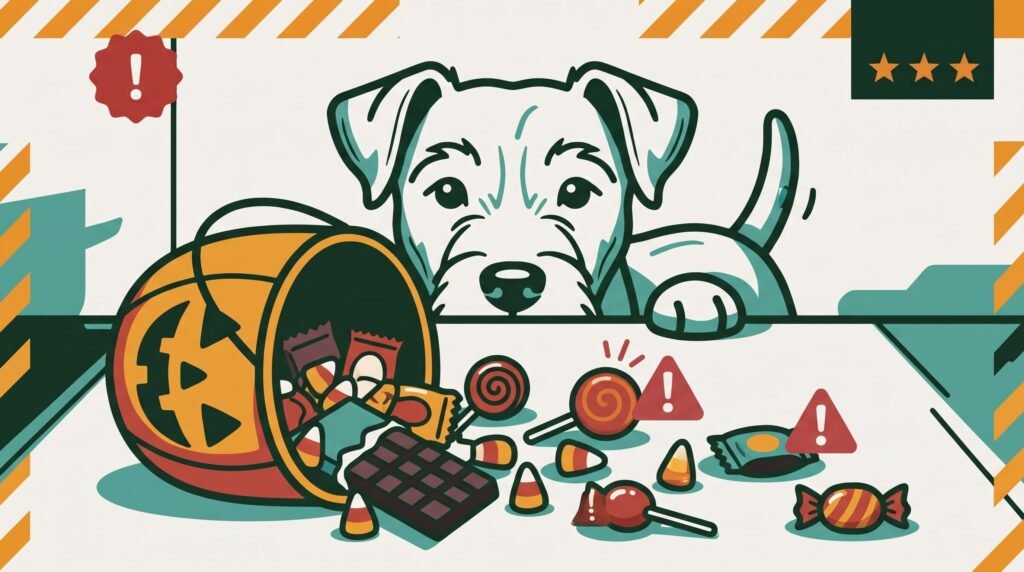
The most dangerous Halloween candy for dogs is chocolate (especially dark and baking chocolate), anything sugar-free that contains xylitol, and raisins. Close behind are cannabis (THC) gummies that look like ordinary candy, and the wrappers and lollipop sticks dogs swallow along with the sweets. Fruity chews, candy corn and other sugary treats are less toxic, but a big haul can still cause pancreatitis days later.
Every year the week of Halloween brings a sharp rise in calls to pet poison hotlines, with chocolate at the top of the list, according to Pet Poison Helpline. This guide covers which treats are dangerous, how much is too much for a dog your size, the symptoms to watch for over the next few days, and exactly what to do if your dog raids the candy bowl.
If your dog just ate Halloween candy: gather every wrapper you can find, then call your vet, an emergency clinic, ASPCA Animal Poison Control at (888) 426-4435 or Pet Poison Helpline at (855) 764-7661. Both are open 24/7 and may charge a consultation fee.
Which Halloween candy is dangerous for dogs?
Not all candy is equally risky. This table ranks the common contents of a trick-or-treat bag, from emergencies to stomach upsets.
| Candy or item | How serious | Why it’s a problem | Learn more |
|---|---|---|---|
| Sugar-free gum, mints and candy | Emergency | Often contain xylitol, which can crash a dog’s blood sugar within an hour and damage the liver | Xylitol guide |
| Dark chocolate, baking chocolate, cocoa-heavy treats | Emergency | High in theobromine and caffeine, which dogs clear very slowly | Chocolate guide |
| Raisin boxes and chocolate-covered raisins | Emergency | Raisins can cause sudden kidney failure, and no amount is known to be safe | Raisins guide |
| THC (cannabis) gummies and edibles | Emergency | Often mistaken for regular candy; can also contain chocolate or xylitol | Cannabis in the checker |
| Chocolate-covered espresso or coffee beans | Emergency | A double dose of stimulants from chocolate plus caffeine | Caffeine in the checker |
| Milk chocolate bars | Depends on amount and dog size | Less concentrated than dark chocolate, but several bars can poison a small dog | Chocolate toxicity chart |
| Candy with macadamia nuts | Call a vet | Macadamia nuts cause weakness, tremors and fever in dogs | Macadamia guide |
| Wrappers, foil and lollipop sticks | Call a vet | Can block the stomach or intestines, sometimes needing surgery | See wrappers and sticks |
| Candy corn, gummies, fruity chews, hard candy | Usually mild | Mostly sugar; large amounts can cause vomiting, diarrhea or pancreatitis | See sugary candy |
| White chocolate | Usually mild | Almost no theobromine, but very high in fat and sugar | Chocolate guide |
The American Veterinary Medical Association makes an important point: you often can’t tell what a treat contains just by looking at it. Keep the wrappers, because the ingredient list is what your vet needs.
Chocolate: the most common Halloween emergency
Chocolate is the classic Halloween poisoning. It was the No. 4 pet toxin of 2025 at ASPCA Animal Poison Control, making up 13.6% of cases, and the ASPCA notes that dogs are the most common culprits. Pet Poison Helpline says dogs account for about 95% of its chocolate calls.
Chocolate contains theobromine and caffeine, stimulants that race a dog’s heart and overstimulate the nervous system. Dogs break theobromine down so slowly that symptoms usually start 6 to 12 hours after eating and can last up to three days.
How dangerous it is depends on three things:
- The type of chocolate. Baking chocolate and cocoa powder are the most dangerous, then dark chocolate, then semisweet and milk chocolate. White chocolate contains almost none of the toxic stimulants.
- How much was eaten. Fun-size bars add up fast. The weight is printed on each wrapper, so add the wrappers up.
- Your dog’s weight. Small dogs reach a toxic dose with far less.
As a rough guide from our chocolate toxicity chart, symptoms become likely at about:
| Dog’s weight | Milk chocolate | 70% dark chocolate |
|---|---|---|
| 10 lb (4.5 kg) | 40 g (1.4 oz) | 8 g (0.3 oz) |
| 20 lb (9 kg) | 80 g (2.8 oz) | 17 g (0.6 oz) |
| 40 lb (18 kg) | 161 g (5.7 oz) | 33 g (1.2 oz) |
| 60 lb (27 kg) | 241 g (8.5 oz) | 50 g (1.8 oz) |
Twice these amounts can affect the heart, and three times can cause seizures. These figures show urgency, not a safe limit: call your vet or a poison hotline whatever the amount. The full chart, covering baking chocolate and cocoa too, is in our chocolate guide, and our dog chocolate toxicity calculator works out the dose for your dog’s exact weight and the candy they ate.
Sugar-free candy and gum: the hidden danger
Many sugar-free candies, mints and gums are sweetened with xylitol, also listed as birch sugar. It’s harmless to people but triggers a flood of insulin in dogs, which can drop blood sugar dangerously within 10 to 60 minutes. Larger amounts can cause liver failure.
It takes very little. Based on the Merck Veterinary Manual’s danger point of 0.1 g of xylitol per kg of body weight, half a piece of a high-xylitol gum can be enough to drop the blood sugar of a 10 lb dog. See the gum-pieces chart in our xylitol guide.
Sugar-free treats are easy to miss in a mixed candy bag, so check every wrapper that says “sugar-free”, “no sugar added” or “keto”. Also watch for adults’ handbags and coat pockets left on the floor while guests visit: they often hold gum.
Signs to watch for: vomiting, weakness, wobbliness, trembling, collapse or seizures. If you see these, go straight to an emergency vet.
Raisins: the “healthy” treat that isn’t
Small boxes of raisins are a popular “healthier” Halloween handout, and chocolate-covered raisins turn up in candy mixes. For dogs, raisins are one of the most dangerous foods there are. They can cause sudden kidney failure, and vets can’t predict which dogs will be affected.
The Merck Veterinary Manual warns that more than one grape or raisin per 10 lb of body weight may be enough to put the kidneys at risk, and some dogs have been affected by less. A single snack box holds far more than that. Treat any raisin snack as an emergency and call your vet, even if your dog seems fine. See how many raisins are dangerous for your dog in our raisins guide.
THC gummies and edibles that look like candy
Cannabis gummies and chocolates can look almost identical to regular Halloween candy, and Pet Poison Helpline lists them as a high-concern Halloween hazard. Recreational drugs, including marijuana, made up 1.9% of the cases in the ASPCA’s top 10 toxins of 2025.
According to Cornell University’s College of Veterinary Medicine, signs can start anywhere from 30 minutes to several hours after a dog eats THC and include:
- Wobbliness and trouble walking
- A dazed or sleepy look
- Dribbling urine
- Being unusually sensitive to sound or touch
- Dilated, glassy eyes
- Vomiting or drooling
Most dogs recover within one to two days with care, but severe cases happen, and edibles often contain chocolate, xylitol or fatty butter as well. Tell your vet honestly what your dog may have eaten. Vets need to know in order to treat your dog safely, and human urine drug tests don’t work reliably on dogs.
Wrappers, foil and lollipop sticks
Dogs rarely unwrap their candy. They swallow wrappers, foil, plastic bags and lollipop sticks along with the treat, and these can get stuck in the stomach or intestines. Pet Poison Helpline warns that this kind of blockage can need surgery.
Count the wrappers you find and tell your vet how many are missing. Then watch for signs of a blockage over the next few days:
- Repeated vomiting, especially after eating or drinking
- Not wanting to eat
- A painful or bloated belly
- Straining to poop, or no poop at all
- Lethargy
Lollipop sticks are a particular worry because they can be sharp and rigid. Call your vet if your dog swallowed one.
Sugary and fatty candy: the pancreatitis risk
Candy corn, gummies, fruity chews and hard candy aren’t poisonous in the way chocolate or xylitol are. In small amounts they usually cause nothing worse than an upset stomach. A whole bag is a different story: Pet Poison Helpline notes that large amounts of sugar and fat can trigger pancreatitis, a painful inflammation of the pancreas, which may not show up until two to four days later. The Merck Veterinary Manual adds that the high fat content of chocolate can also trigger pancreatitis in susceptible dogs.
Watch for vomiting, diarrhea, loss of appetite, a hunched posture or a painful belly in the days after a candy binge, and call your vet if you see them.
Other Halloween hazards for dogs
Candy isn’t the only risk on Halloween night. The ASPCA, AVMA and Pet Poison Helpline also warn about:
- Glow sticks and glow jewelry. The liquid inside tastes extremely bitter and causes heavy drooling, foaming and odd behavior, but it’s usually not life-threatening. The ASPCA says a small treat or a sip of milk usually clears the taste.
- Candles and jack-o’-lanterns. Wagging tails and curious noses can knock them over and cause burns or fires. Use battery-powered lights instead.
- Moldy pumpkins. Old, rotting pumpkins and decorations can grow molds that cause tremors and seizures. Throw them out once they start to spoil.
- Costumes. A costume should never limit your dog’s vision, movement or breathing, and small parts like beads, bells and snaps can be swallowed. Some metal parts contain zinc or lead.
- Small toys and decorations that can be chewed and swallowed.
- The front door. Constant doorbells and strangers in masks frighten many dogs, and an open door is an escape route. Keep anxious dogs in a quiet room during trick-or-treat hours, and make sure your dog wears an ID tag and is microchipped with up-to-date details.
My dog ate Halloween candy. What should I do?
Stay calm and act quickly. Most dogs that get help early recover well.
- Move your dog away and gather the evidence. Pick up all the candy that’s left and collect every wrapper you can find, including any in the bin or under the furniture.
- Work out what was eaten. Read the wrappers. Look for chocolate type and cocoa percentage, the words “sugar-free”, xylitol or birch sugar, raisins, nuts, and anything that could be a cannabis product.
- Estimate how much. Count wrappers and add up the weights printed on them.
- Know your dog’s weight. Use the last vet visit, or weigh yourself holding your dog and subtract your own weight.
- Call your vet, an emergency clinic or a poison hotline right away. ASPCA Animal Poison Control: (888) 426-4435. Pet Poison Helpline: (855) 764-7661. Outside North America, call your nearest emergency vet. If you want to check a specific ingredient while you wait, use our dog food checker.
- Don’t make your dog vomit unless a vet tells you to. Inducing vomiting isn’t safe for every dog, home remedies like salt can cause harm, and a dog with low blood sugar from xylitol can collapse.
- Go in straight away if your dog shows any warning signs, such as weakness, wobbling, collapse, seizures, a racing heart or repeated vomiting.
- Keep watching for three days, even if you’re told to monitor at home. Chocolate signs can last up to 72 hours, and pancreatitis and blockages can take days to show.
For a printable version of these steps for any food emergency, see our emergency steps.
When is it an emergency?
Go to the vet or call a hotline immediately if your dog ate:
- Anything sugar-free, or anything listing xylitol or birch sugar
- Dark chocolate, baking chocolate, cocoa or chocolate-covered espresso beans
- Any amount of raisins or chocolate-covered raisins
- A cannabis edible, or a gummy you can’t identify
- A lollipop stick or a lot of wrappers
- Any amount of chocolate if your dog is small
A large dog that ate one fun-size milk chocolate bar may only need monitoring, but let a professional make that call.
What to watch for, and when
| Time after eating | What may be happening | Signs |
|---|---|---|
| Within about an hour | Xylitol lowering blood sugar | Vomiting, weakness, wobbliness, collapse, seizures |
| 30 minutes to several hours | THC from an edible | Wobbliness, sleepiness, dribbling urine, sensitivity to noise |
| 6 to 12 hours | Chocolate poisoning | Vomiting, diarrhea, thirst, restlessness, racing heart, tremors |
| 6 to 24 hours, then 1 to 3 days | Raisins damaging the kidneys | Vomiting first; later drinking and peeing more, then less |
| 2 to 4 days | Pancreatitis from sugar and fat | Vomiting, belly pain, hunched posture, not eating |
| Hours to days | Swallowed wrappers or sticks | Repeated vomiting, not eating, straining, no poop |
How to keep your dog safe this Halloween
- Store candy up high or in closed containers, never in a bowl on the coffee table or by the door.
- Sort the kids’ candy at the table with your dog in another room, and keep trick-or-treat bags off the floor.
- Check for sugar-free candy and raisins in the haul, and set them aside well out of reach.
- Bin wrappers in a lidded trash can.
- Brief children and guests: no sharing candy with the dog, and bags and coats go on a hook, not the floor.
- Give your dog a quiet room with water and a chew toy during trick-or-treat hours.
- Check your dog’s ID tag and microchip details before the big night.
- Choose battery candles and keep glow sticks and costume accessories out of reach.
- Save the hotline numbers in your phone so you’re not searching for them in a panic.
Dog-safe Halloween treats
Your dog doesn’t have to miss out. These are safe in small amounts:
- Plain pumpkin (not pie filling, which contains sugar and spices), frozen in an ice cube tray
- Frozen “pupsicles” made with plain pumpkin and a little xylitol-free peanut butter
- Apple slices, with the core and seeds removed
- Blueberries or carrot sticks
- Dog treats in a Halloween shape, from a pet store or bakery
Keep extras to about 10% of your dog’s daily calories. Our dog calorie calculator shows your dog’s daily total and treat budget, and the dog food chart lists every food we’ve checked, safe and unsafe.
Halloween candy and dogs: quick questions
How much Halloween chocolate will hurt my dog?
It depends on the type of chocolate and your dog’s weight. For milk chocolate, symptoms become likely at roughly 1 oz for every 7 lb of dog; for 70% dark chocolate, about 1 oz for every 34 lb. Baking chocolate and cocoa are more dangerous still. Check the chocolate toxicity chart and call your vet.
My dog ate a candy wrapper. What should I do?
A single small wrapper sometimes passes on its own, but wrappers can cause a blockage, especially in small dogs or when several wrappers or a lollipop stick were swallowed. Check what was inside the wrapper, call your vet for advice, and watch for vomiting, a sore belly, loss of appetite or straining over the next few days.
Is candy corn toxic to dogs?
No, candy corn isn’t toxic, but it’s almost pure sugar. A few pieces may cause an upset stomach; a large amount can cause vomiting, diarrhea or pancreatitis. Don’t share it.
Are gummies and fruity chews safe for dogs?
Regular sugary gummies aren’t toxic, but they aren’t good for dogs either, and large amounts can cause stomach upset or pancreatitis. Sugar-free gummies may contain xylitol, and cannabis gummies look almost identical to candy, so check the wrapper and call your vet if you’re unsure.
My dog ate Halloween candy but seems fine. Do I still need to call?
Yes, if the candy contained chocolate, xylitol, raisins, nuts or THC, or if wrappers were swallowed. Chocolate symptoms often take 6 to 12 hours to start, raisin damage can begin before any signs appear, and pancreatitis and blockages can take days. A quick call now is far better than an emergency visit later.
My dog bit a glow stick. Is it poisonous?
Usually not. The liquid inside tastes very bitter, so dogs drool, foam at the mouth or act strangely, but serious poisoning is unlikely. A small treat or a sip of milk usually clears the taste. Call your vet if your dog swallowed pieces of plastic or seems unwell.
Can dogs eat pumpkin at Halloween?
Yes. Plain cooked or canned pumpkin is a healthy treat in small amounts. Avoid pumpkin pie filling, carved jack-o’-lanterns that have been sitting out, and any pumpkin that has started to rot or grow mold.
Sources
Learn how we research and review our guides. Spotted something that looks wrong? Tell us and we’ll check it against these sources.
- Pet Poison Helpline. Halloween Pet Safety: Dangers for Dogs & Cats. Reviewed by Renee Schmid, DVM. Updated October 2026.
- ASPCA. Your Guide to a Pet-Safe Halloween.
- ASPCA. The Top 10 Toxins of 2025. March 2026.
- American Veterinary Medical Association. Halloween pet safety.
- Hayes C. Chocolate Toxicosis in Animals. Merck Veterinary Manual. Updated February 2026.
- Hayes C. Xylitol Toxicosis in Dogs. Merck Veterinary Manual. Updated June 2025.
- Hayes C. Grape, Raisin, and Tamarind Toxicosis in Dogs. Merck Veterinary Manual. Reviewed September 2024.
- Cohen A. Cannabis (THC) intoxication in dogs. Cornell University College of Veterinary Medicine. Updated December 2025.
This article is for general information and isn’t a substitute for advice from your veterinarian. If you think your dog has eaten something harmful, contact a vet immediately.
2 comments