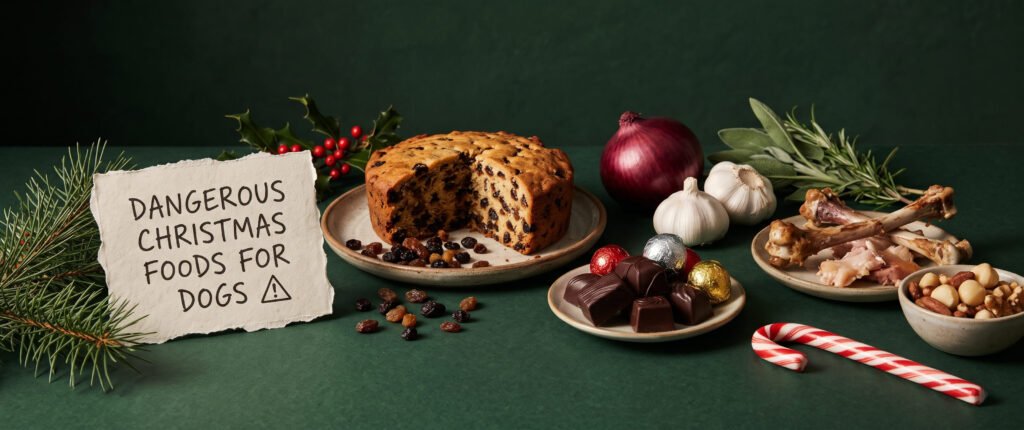
Which Christmas Foods Are Dangerous for Dogs?
Chocolate, fruitcake, mince pies, xylitol, alcohol and raw dough top the list. Here’s every Christmas food ranked, how much is too much for your dog’s size,…
Free dog food safety checker
Type a single food, a whole meal, or paste an ingredient label. You’ll get a clear answer — and what to do if your dog already ate it.
Most checked
Or check a whole meal
PatientOne very good dog
Type a food or a whole meal to start the checkup.
83foods & ingredients
30on the keep-away list
21flagged “call a vet”
Updated October 2026
The dog food chart
Every food in our checker, sorted by verdict. Tap any food for its full checkup.
Safe to share33 foods
Small amounts20 foods
Keep away30 foods
Nothing matches. Try the checker at the top, or see what to do if your dog already ate something.
Emergency steps
Outside North America? Call your regular vet or the nearest 24-hour emergency clinic.
Go straight to a vet if your dog is having seizures, collapsing or struggling to breathe.
Free tool
Human food should stay a small extra — about 10% of the day’s calories. Get your dog’s daily number from their weight, age and activity, and you’ll know exactly how much room there is for treats.
Free tool
Enter your dog’s weight, the type of chocolate and how much they ate. You’ll see the dose, the risk level and what to do next.
From the blog
Chocolate, fruitcake, mince pies, xylitol, alcohol and raw dough top the list. Here’s every Christmas food ranked, how much is too much for your dog’s size,…
FAQ
Ratings are based on guidance from veterinary toxicology and nutrition sources, including ASPCA Animal Poison Control, Pet Poison Helpline, the Merck Veterinary Manual and the American Kennel Club. When a food is only safe with lots of caveats, we rate it conservatively.
Last updated
Plain, cooked lean meats (chicken, turkey, beef), cooked fish like salmon, eggs, plain rice and oats, and many fruits and vegetables — carrots, green beans, pumpkin, blueberries, apples without the core, and seedless watermelon. Keep human food to treat-sized portions: about 10% of your dog’s daily calories.
The most dangerous are chocolate, grapes and raisins, onions, garlic, chives and leeks, xylitol (found in sugar-free gum and some peanut butters), macadamia nuts, alcohol, caffeine, raw yeast dough and hops. The keep-away column of our chart flags every food that warrants a call to your vet.
No. Many toxins — including grapes, xylitol and onions — can take hours or days to cause visible signs, and treatment works best early. Call your vet, an emergency clinic or a pet poison hotline right away.
Yes, if it’s plain and xylitol-free. Some sugar-free or specialty brands use xylitol (sometimes listed as “birch sugar”), which can be fatal to dogs, so check the label every time.
Plain scraps in small amounts are usually fine. The problem is what’s cooked with them — onion, garlic, salt, butter, gravy and fatty trimmings — plus cooked bones, which can splinter. Fatty meals are a common trigger for pancreatitis.
A common vet guideline is that treats and extras should make up no more than about 10% of your dog’s daily calories. Our calorie calculator gives your dog’s daily total so you can work out a treat budget.