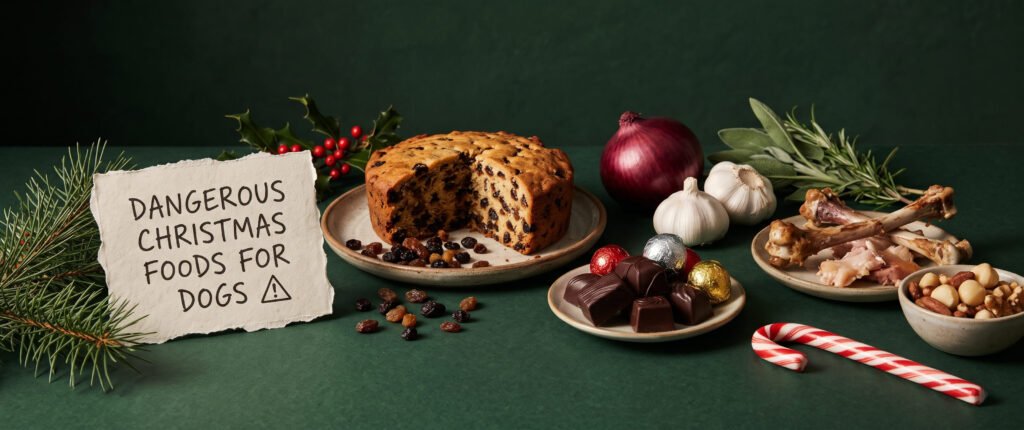
Chocolate, anything with raisins or currants, sugar-free treats with xylitol, alcohol, raw yeast dough and macadamia nuts are the most dangerous Christmas foods for dogs. Fatty leftovers, cooked bones, onion stuffing and blue cheese come close behind.
December is the busiest month for these accidents. The UK’s Royal Kennel Club says dogs are 75% more likely to be treated by a vet for eating poisonous human food in December than in any other month, and chocolate cases peak then too. Below you’ll find every common Christmas food ranked, how much is too much for a dog your size, and when symptoms usually start.
If your dog already ate something on this list: take away what’s left, keep the wrapper or recipe, and call your vet or a pet poison hotline: ASPCA Animal Poison Control (888) 426-4435 or Pet Poison Helpline (855) 764-7661, both 24/7 (a fee may apply). Not sure which line to call? See ASPCA vs Pet Poison Helpline. Then follow our first-hour emergency steps.
Christmas foods dogs can’t eat: the quick list
| Food | Danger for dogs | Main problem |
|---|---|---|
| Chocolate, cocoa, chocolate coins and advent calendars | Call a vet | Theobromine and caffeine. Dark and baking chocolate are the strongest. |
| Christmas pudding, mince pies, fruitcake, stollen, panettone | Call a vet now | Raisins, currants and sultanas can cause kidney failure. No safe amount is known. |
| Sugar-free candy canes, gum, cookies and “keto” treats | Call a vet now | May contain xylitol (birch sugar), which crashes blood sugar and can damage the liver. |
| Mulled wine, eggnog, cocktails, rum-soaked cake | Call a vet | Alcohol. Creamy, eggy drinks tempt dogs. |
| Raw bread, roll or pizza dough | Call a vet now | Rises in the stomach and makes alcohol. |
| Macadamia nuts, including chocolate-covered | Call a vet | Weakness, wobbliness, tremors and fever. |
| Sage and onion stuffing, onion gravy | Call a vet | Onions and garlic damage red blood cells. Signs can take days. |
| Christmas ham, pigs in blankets, turkey skin, drippings | Keep away | Salt and fat; fatty scraps can trigger pancreatitis. |
| Cooked turkey and ham bones | Keep away | Choking and gut blockage or injury. |
| Blue cheese (Stilton, Roquefort) | Keep away | Roquefortine C can cause tremors and seizures in more extreme cases. |
| Gingerbread, Christmas cookies, cake | Not a good idea | Sugar, fat, nutmeg; check for xylitol, raisins, nuts or chocolate. |
| Coffee, espresso, chocolate-covered coffee beans | Call a vet | Caffeine, a stimulant. |
| Plain turkey breast, no skin or bones | Yes, a little | Lean protein. See how much turkey a dog can eat. |
How much is too much for a dog your size?
Most Christmas emergencies come down to dose: how much your dog ate compared with their weight. This table shows where the warning points fall for the three toxins most often found in holiday treats. They come from the Merck Veterinary Manual: mild chocolate signs start at about 20 mg/kg of stimulants, more than one raisin per 10 lb may risk kidney injury, and xylitol above about 100 mg/kg has been linked to low blood sugar.
| Dog’s weight | Milk chocolate that can cause signs | Semisweet chocolate chips | Raisins past Merck’s warning point | Xylitol linked to low blood sugar |
|---|---|---|---|---|
| 10 lb (4.5 kg) | 40 g (1.4 oz) | 16 g (0.6 oz) | More than 1 | 0.45 g |
| 20 lb (9 kg) | 80 g (2.8 oz) | 32 g (1.1 oz) | More than 2 | 0.9 g |
| 40 lb (18 kg) | 161 g (5.7 oz) | 64 g (2.3 oz) | More than 4 | 1.8 g |
| 60 lb (27 kg) | 241 g (8.5 oz) | 96 g (3.4 oz) | More than 6 | 2.7 g |
| 80 lb (36 kg) | 321 g (11.3 oz) | 129 g (4.5 oz) | More than 8 | 3.6 g |
Read these as “call now” points, not safe limits. Dark chocolate and baking chocolate are far stronger than milk chocolate, so check your exact bar with our chocolate toxicity calculator. No safe amount of raisins is known, so any amount deserves a call. Xylitol content varies by product and is rarely listed in grams, so call if it’s on the label at all.
The biggest Christmas dangers, one by one
Chocolate in stockings, tins and advent calendars
Chocolate is the classic Christmas emergency. Merck lists cocoa powder as the strongest form, at 807 mg of stimulants per ounce, then unsweetened baking chocolate at 440 mg, semisweet and dark chocolate at 150–160 mg, and milk chocolate at 64 mg. Signs usually start 6–12 hours after eating and can last up to 72 hours in severe cases.
Wrapped gifts are a common trap. The ASPCA warns that pets can smell food inside presents, so keep chocolate gifts off the floor and away from the tree. Our guide explains why holidays are when most chocolate accidents happen.
Christmas pudding, mince pies, fruitcake and stollen
All of these are packed with dried fruit. The Royal Kennel Club says raisins, currants and sultanas are toxic to dogs and that dried fruit may be more toxic than fresh grapes. Merck says kidney failure can develop within 1 to 3 days. Rum-soaked fruitcake adds alcohol to the mix.
Call a vet after any amount, even if your dog seems fine. Our raisins guide and grapes guide cover the signs and what treatment involves.
Sugar-free sweets and xylitol
Sugar-free candy canes, gum, mints, cookies and some peanut butters can contain xylitol, which VCA notes may be labeled “birchwood sugar.” Merck says low blood sugar can start within 30 minutes, or 12–18 hours later with some gums, and liver damage may not show for 24–48 hours. The FDA advises checking the label and calling your vet immediately if xylitol is listed.
Guests’ bags and coat pockets can hide sugar-free gum, so hang them out of reach.
Mulled wine, eggnog and other drinks
The Royal Kennel Club says dogs are believed to be more sensitive to alcohol than people, and that cream- or egg-based drinks like eggnog may be especially appealing. Merck says signs of alcohol poisoning usually begin within 30–60 minutes: vomiting, wobbliness, disorientation and lethargy, and in severe cases low body temperature, seizures and coma. The ASPCA’s advice is simple: don’t leave drinks unattended where pets can reach them. Our checker flags alcohol as a “call a vet” food.
Raw dough for rolls, bread and pizza
Merck explains that yeast keeps working in a dog’s warm stomach, so raw dough expands and can bloat the stomach while the fermenting yeast produces alcohol. Early signs are trying to vomit without bringing anything up, a swollen belly and lethargy, then wobbliness and disorientation. Merck notes that deaths are usually from the alcohol rather than the bloating. Keep rising dough well out of reach.
Macadamia nuts and nut bowls
Merck says dogs are the only species known to be affected by macadamia nuts. Signs start within 12 hours (vomiting, weakness, wobbliness, tremors and fever) and usually settle within 12–48 hours. Chocolate-covered macadamias are a double risk, the Royal Kennel Club warns. Other nuts are very fatty, so keep the whole bowl off the coffee table.
Stuffing, gravy and anything with onion or garlic
Sage and onion stuffing and onion gravy are made with members of the allium family: onions, garlic, leeks, shallots and chives. The Royal Kennel Club says these can cause life-threatening anemia by damaging red blood cells, and signs may not show for a few days.
Ham, turkey skin and other fatty leftovers
Christmas ham is very salty and fatty. Fat trimmings and roasted turkey or chicken skin can trigger pancreatitis, the FDA says, and Pet Poison Helpline lists abdominal pain, vomiting and bloody diarrhea as signs. Cooked bones from the turkey or ham can cause choking or a blockage, the AVMA warns; see our cooked bones guide if your dog got hold of one.
The cheese board
A small cube of plain cheese is usually fine, but blue cheeses such as Stilton and Roquefort contain roquefortine C. The Royal Kennel Club says that in more extreme cases dogs can develop muscle tremors and seizures that may last up to two days. Grapes on the same board are a bigger risk still.
Nutmeg, gingerbread and spiced bakes
Nutmeg contains myristicin. Pet Poison Helpline says a dog would need to eat a very large amount for serious poisoning, and the small amount in a recipe is very unlikely to cause it. The bigger risks in gingerbread and Christmas cookies are the sugar and fat, plus any raisins, nuts, chocolate or xylitol in the recipe.
When symptoms start: a Christmas timeline
Many of these poisons are delayed, so a dog that seems fine an hour later may not be. These timings are from Merck, Pet Poison Helpline and the Royal Kennel Club.
| What your dog ate | When signs usually start | What to watch for |
|---|---|---|
| Xylitol | Within 30 minutes (12–18 hours with some gums); liver signs 24–48 hours | Low blood sugar first, then liver damage |
| Alcohol | 30–60 minutes | Vomiting, wobbliness, drowsiness, low body temperature |
| Raw yeast dough | Within hours | Retching without vomiting, swollen belly, acting drunk |
| Chocolate | 6–12 hours; can last up to 72 hours | Vomiting, diarrhea, thirst, restlessness, racing heart, tremors |
| Raisins, currants, sultanas | Vomiting or diarrhea in 6–12 hours; kidney failure in 1–3 days | Vomiting, diarrhea, then signs of kidney failure |
| Macadamia nuts | Within 12 hours; usually over in 12–48 hours | Weak back legs, tremors, fever |
| Onions and garlic | A few days | Vomiting, diarrhea, sleepiness, weakness, fast breathing |
| Blue cheese | Varies; tremors may last up to 2 days | Tremors, seizures in more extreme cases |
Call before signs appear. Merck notes that some treatments only help if they’re given soon after eating, sometimes within the first half hour.
My dog ate Christmas food. What should I do?
- Take away what’s left and keep the wrapper, label or recipe.
- Work out what was eaten, roughly how much, and when.
- Call your vet, an emergency clinic or a pet poison hotline, even if your dog seems fine.
- Don’t make your dog vomit unless a vet tells you to.
- Watch for the signs in the timeline above and go in straight away if your dog collapses, has a seizure or can’t stand.
Our guide to what to do in the first hour has the full steps, and the AVMA lists sudden behavior changes, pain, appetite loss, vomiting and diarrhea as reasons to call right away.
How to keep your dog safe this Christmas
- Keep food gifts off the floor and away from the tree until they’re opened.
- Ask guests not to share food, and to hang up bags that may hold gum or medicine.
- Set drinks on high surfaces and clear glasses before bed.
- Bin leftovers and bones in a sealed bag inside a lidded or outdoor bin, as the AVMA advises.
- Give your dog a quiet room with a chew toy during the busiest hours.
- Save the hotline numbers and your nearest 24-hour clinic in your phone now.
Want to share something festive? A few pieces of plain, skinless, boneless turkey breast are fine for most dogs. Keep it small, and mix it into dinner rather than feeding from the table. Our dog calorie calculator shows how many calories your dog needs a day. Our Thanksgiving plate-by-plate guide covers the side dishes that are safe plain.
Christmas foods and dogs: quick questions
What Christmas foods are poisonous to dogs?
Chocolate, raisins and currants (in Christmas pudding, mince pies, fruitcake and stollen), xylitol, alcohol, raw yeast dough, macadamia nuts, and onions or garlic in stuffing and gravy. Fatty leftovers, cooked bones and blue cheese can also make dogs ill.
Can dogs eat Christmas pudding or mince pies?
No. Both are full of raisins, currants and sultanas, which can cause kidney failure in dogs, and no safe amount is known. Many also contain alcohol. Call your vet after any amount.
Can dogs eat candy canes?
It’s best not to. Regular candy canes are mostly sugar, and sugar-free candy canes may contain xylitol, which is dangerous even in small amounts. Check the label and call your vet if xylitol is listed.
Can dogs drink eggnog?
No. Spiked eggnog contains alcohol, which dogs are more sensitive to than people, and the Royal Kennel Club warns that creamy, eggy drinks are especially tempting. Even alcohol-free eggnog is rich and sugary.
Can dogs eat gingerbread?
Not as a treat. Gingerbread is sugary and fatty, and it’s spiced with nutmeg. A small nibble of a plain cookie is unlikely to poison a dog, but check the recipe for xylitol, raisins, nuts or chocolate.
Can dogs eat Christmas ham?
It’s best avoided. Ham is very salty and fatty, and the bone can splinter or cause a blockage. See our ham guide for what a slice means for a dog your size.
Can dogs eat turkey at Christmas?
Yes, a little plain, skinless, boneless turkey breast is fine. Skip the skin, gravy, stuffing and bones. Our turkey guide has portion sizes by weight.
Sources
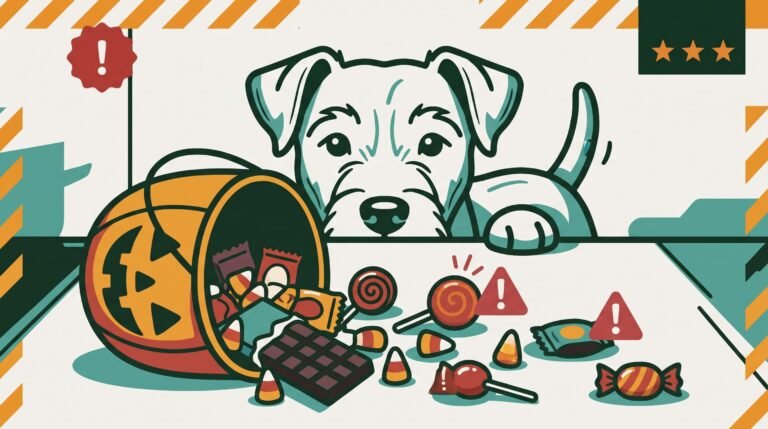
Learn how we research and review our guides. Spotted something that looks wrong? Tell us and we’ll check it against these sources. Check any other food in our dog food checker or the dog food chart, and see our Halloween candy guide for more on sweets.
- Royal Kennel Club. Christmas foods: what not to give dogs at Christmas.
- Hayes C. Chocolate Toxicosis in Animals. Merck Veterinary Manual. Last updated February 2026.
- Gwaltney-Brant SM. Food Hazards (grapes and raisins, macadamia nuts). Merck Veterinary Manual. Last updated May 2026.
- Hayes C. Xylitol Toxicosis in Dogs. Merck Veterinary Manual. Last updated June 2025.
- Gwaltney-Brant SM. Toxicoses From Alcohols in Animals. Merck Veterinary Manual. March 2025.
- Hayes C. Bread Dough Toxicosis in Animals. Merck Veterinary Manual. Last updated August 2025.
- ASPCA. Holiday Safety Tips.
- American Veterinary Medical Association. Winter holiday pet safety.
- U.S. Food and Drug Administration. Keep Your Dogs and Cats Safe From Holiday Hazards. December 2025.
- Pet Poison Helpline. Holiday Toxins and Winter Toxins for Pets. Updated May 2026.
- Pet Poison Helpline. Nutmeg and Cinnamon Toxicity.
- Schmid R, Brutlag A. Holiday Toxins for Pets. VCA Animal Hospitals. Updated October 2026.
This article is for general information and isn’t a substitute for advice from your veterinarian. If you think your dog has eaten something harmful, contact a vet immediately.
Comments