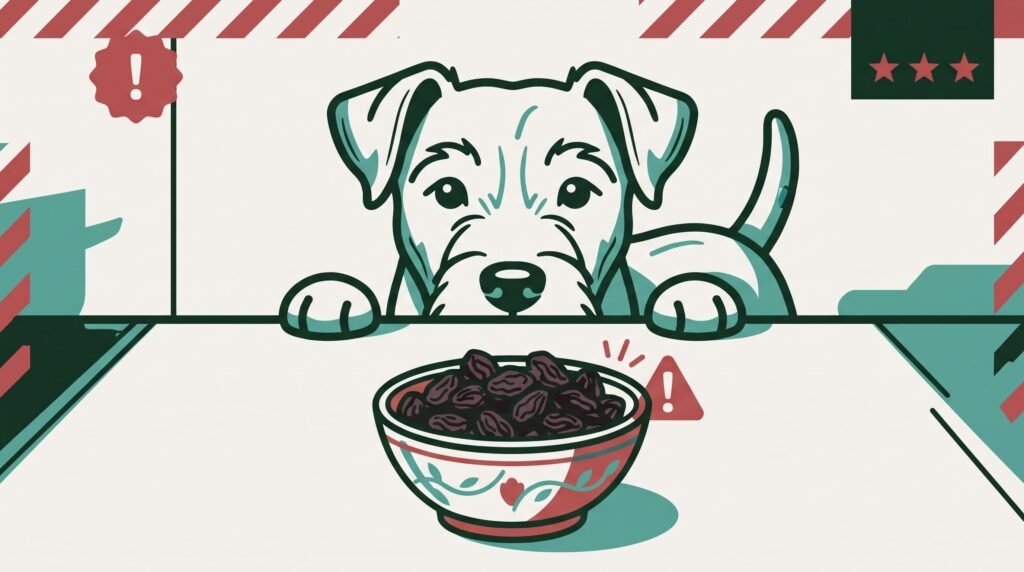
No — dogs should never eat raisins. Raisins, sultanas and dried currants can cause sudden kidney failure in dogs, and no amount is known to be safe. Because they are small, sweet and hidden in everyday foods like cereal, trail mix, cookies and holiday cakes, a dog can swallow dozens before anyone notices.
The danger is unpredictable: some dogs eat a handful of raisins with no ill effects, while others go into kidney failure after a few. Vets can’t tell in advance which dog will be affected, so every case is treated as serious. Below you’ll find why raisins are toxic, how many is too many for a dog your size, which foods hide them, the symptoms to watch for and exactly what to do now.
If your dog just ate raisins: call your vet, an emergency clinic, ASPCA Animal Poison Control at (888) 426-4435 or Pet Poison Helpline at (855) 764-7661 now, even if your dog seems fine. Then follow the steps in what to do if your dog ate raisins.
Why are raisins toxic to dogs?
Raisins are simply dried grapes, and they carry the same risk as fresh grapes. For more than 20 years, vets knew grapes and raisins could poison dogs but couldn’t say why. The leading explanation came in 2021, when veterinarians at the ASPCA Animal Poison Control Center identified tartaric acid, the natural acid that gives grapes their tartness, as the likely culprit.
According to the Merck Veterinary Manual, dogs lack the transporters that other animals use to clear this kind of acid from the kidneys. Instead of being flushed out, tartaric acid builds up inside the cells of the kidney’s filtering tubules and damages them. A 2023 laboratory study backed this up: tartaric acid harmed dog kidney cells but not human kidney cells, which is why raisins are a healthy snack for you and a hazard for your dog.
Tartaric acid also explains the unpredictability. The amount in grapes varies with the variety, the growing conditions and how ripe the fruit was, so one box of raisins can be far more dangerous than another. Researchers still describe tartaric acid as the proposed cause rather than a closed case, but it is the best explanation available, and it’s why tamarind and cream of tartar are now considered dangerous for dogs too.
How many raisins are dangerous for a dog?
There is no number of raisins known to be safe. The Cornell University College of Veterinary Medicine says even a few grapes or raisins can be dangerous for some dogs, so any amount should be treated as potentially toxic.
The Merck Veterinary Manual gives one warning point: more than one grape or raisin per 10 pounds (4.5 kg) of body weight may contain enough tartaric acid to put the kidneys at risk. Here is what that looks like for different dogs:
| Dog’s weight | Raisins that pass Merck’s warning point |
|---|---|
| 5 lb (2.3 kg) | Even 1 raisin |
| 10 lb (4.5 kg) | More than 1 raisin |
| 20 lb (9 kg) | More than 2 raisins |
| 40 lb (18 kg) | More than 4 raisins |
| 60 lb (27 kg) | More than 6 raisins |
| 80 lb (36 kg) | More than 8 raisins |
| 100 lb (45 kg) | More than 10 raisins |
Read this table as a sign of how little it takes, not as a safe limit. Nobody can measure the tartaric acid in the raisins your dog ate, so a dog below these numbers still needs a call to the vet. A small handful of raisins is over the warning point for almost every dog, and a single snack-size box holds far more than that.
Are raisins worse than grapes?
Vets treat raisins as just as dangerous as grapes. A raisin keeps the tartaric acid of the grape it came from, packed into a fraction of the size. That makes raisins easy for a dog to eat by the dozen, often without chewing, so the total dose can climb much faster than with fresh grapes.
Which foods contain raisins?
Most raisin poisonings don’t come from a box of plain raisins. They come from foods where raisins are mixed in, baked in or easy to miss. The raisins are just as dangerous when cooked or baked.
| Food | If your dog eats it | Why |
|---|---|---|
| Raisins of any color: dark, golden, organic, seedless | Call a vet | All are dried grapes. Color, variety and growing method don’t change the risk. |
| Sultanas | Call a vet | Dried white grapes, common in the UK, Australia and baking. |
| Dried currants (Zante or Corinth) | Call a vet | Despite the name, these are tiny dried grapes and are just as dangerous. |
| Raisin bread, cinnamon raisin bagels, scones, hot cross buns | Call a vet | Baked raisins still count. Bring the packaging or recipe. |
| Oatmeal raisin cookies, muffins, granola bars | Call a vet | Bars may contain hidden raisin paste. Check the ingredients for nuts or xylitol too. |
| Trail mix | Call a vet | Raisins plus nuts. Macadamia nuts are also toxic to dogs. |
| Raisin bran and other cereals, muesli, granola | Call a vet | Dogs often finish a bowl left on the table. |
| Chocolate-covered raisins | Call a vet now | Two toxins at once. See chocolate. |
| Fruitcake, Christmas pudding, mince pies, stollen, panettone | Call a vet now | Packed with raisins, sultanas and currants, and often nutmeg or alcohol. |
| Curries, chutneys, rice dishes and salads with raisins | Call a vet | Raisins hide in savory food too, often alongside onion and garlic. |
| Fresh red, black or white currants (the Ribes plant) | Not linked to kidney injury | A different plant from dried “currants”. Too many can still upset the stomach. |
| Grape juice and grape jelly | Not linked to kidney injury | Processing seems to remove much of the tartaric acid. They are sugary, and sugar-free versions may contain xylitol. |
Not sure whether something your dog ate contains raisins? Paste the ingredient list into our dog food checker and it will flag every risky ingredient it recognizes.
Symptoms of raisin poisoning in dogs
Signs usually appear in stages. Some dogs show nothing for many hours, and early blood tests can come back normal, so a dog that seems fine isn’t necessarily in the clear.
Within about 6–24 hours
- Vomiting, the most common first sign. Raisins may still be visible in the vomit up to 12 hours after eating.
- Diarrhea
- Loss of appetite and low energy
- Drooling, belly pain or a swollen belly
Over the next 1–3 days
- Drinking and peeing more as the kidneys struggle
- Weakness, wobbliness and dehydration
- Breath that smells of ammonia
- Trembling or tremors
Advanced kidney failure
- Producing little or no urine
- Swollen legs
- Seizures
Once a dog stops producing urine, the outlook becomes poor even with intensive care. That’s why vets want to see dogs before symptoms start.
My dog ate raisins. What should I do?
Act now, even if your dog ate only a few raisins and seems perfectly well. Early treatment can prevent kidney damage; waiting for symptoms can mean missing the window when treatment works best.
- Take away what’s left and keep the packaging. Work out roughly how many raisins are missing and what else was in the food: nuts, chocolate, xylitol or alcohol all change the advice.
- Note the time. “About 30 raisins from a trail mix bag, an hour ago” is exactly what a vet needs to hear.
- Know your dog’s weight. Use the last vet visit, or weigh yourself holding your dog and subtract your own weight.
- Call your vet, an emergency clinic or a poison hotline right away. ASPCA Animal Poison Control: (888) 426-4435. Pet Poison Helpline: (855) 764-7661. Both are open 24/7 and may charge a consultation fee. Outside North America, call your nearest emergency vet.
- Don’t make your dog vomit unless a vet tells you to. Inducing vomiting isn’t safe for every dog, and home remedies can cause harm. Never use salt. If a vet or poison hotline does tell you to use 3% hydrogen peroxide, follow their exact instructions.
- Go in if they ask you to, even hours later. Raisins can stay in the stomach for a while, so vets can often still bring them up several hours after they were eaten.
- Follow through with the blood tests. Kidney values can look normal at first, so vets usually recheck them over two to three days.
For a printable version of these steps that works for any food emergency, see our emergency steps. For the full walkthrough, read what to do in the first hour after your dog eats something toxic.
“My dog ate one raisin and seems fine”
Still call. Most dogs with a small exposure who are treated promptly do very well, but there is no way to know whether that one raisin was a problem until kidney damage has already begun. A quick call lets a professional weigh your dog’s size, the amount and the timing. For a very small dog, a single raisin can already be past the warning point in the table above.
What the vet or hotline will ask you
- Your dog’s weight, age and any health problems, especially kidney disease
- How many raisins, or how much of the raisin food, is missing
- When it was eaten
- The full ingredient list, if it was a mixed or baked food
- Whether your dog has vomited, and whether you saw raisins in it
- Any other symptoms so far
How vets treat raisin poisoning
There is no antidote for raisin poisoning, so treatment focuses on getting the raisins out and protecting the kidneys.
- Inducing vomiting. If your dog is seen soon after eating raisins and isn’t showing signs, the vet will usually give medication to make them vomit.
- Activated charcoal. Sometimes given to bind what’s left in the gut, although its benefit for raisins is unproven.
- IV fluids for at least 48 hours. The Merck Veterinary Manual recommends a minimum of 48 hours of intravenous fluids after a large ingestion, or if diarrhea starts within 12 hours, to keep the kidneys flushing.
- Repeat blood tests and monitoring. Vets track kidney values, electrolytes, urine output and blood pressure over two to three days.
- Anti-nausea and stomach-protecting medication to keep your dog comfortable.
- Advanced care. If urine production drops, dogs may need medication to stimulate it. Dogs whose kidneys stop producing urine need dialysis, which is mainly available at specialty and university hospitals.
Can a dog survive raisin poisoning?
Yes, especially when treatment starts early. Dogs treated before symptoms or kidney changes appear usually do very well. The outlook becomes guarded once kidney values rise, and poor once the kidneys stop producing urine.
The numbers show why speed matters. In a study of 43 dogs that had already developed kidney injury after eating grapes or raisins, about 53% survived (Eubig et al., Journal of Veterinary Internal Medicine, 2005). Dogs that produced less urine, or that became weak and wobbly, were less likely to recover. VCA Animal Hospitals notes that some dogs that survive go on to develop chronic kidney disease.
Holidays and baking: when raisin accidents happen
Raisins and grapes are among the most common food emergencies vets see. In the ASPCA’s list of the top pet toxins of 2025, human food and drink was the No. 2 category, making up 16.4% of calls, with grapes, raisins, xylitol gum, onions and garlic forming the largest part of that group.
The risk climbs with the calendar:
- Halloween: small boxes of raisins handed out as a “healthy” treat end up in trick-or-treat bags on the floor.
- Thanksgiving: some stuffing, bread and salad recipes include raisins.
- Christmas: fruitcake, mince pies, stollen, panettone and Christmas pudding are full of raisins, sultanas and currants, often with nutmeg and alcohol too. See our full list of Christmas foods that are dangerous for dogs.
- Easter: hot cross buns and simnel cake.
During baking season, keep dried fruit in closed cupboards, cool baking at the back of the counter, and remind guests not to share their plates.
How to keep raisins away from your dog
- Store raisins and dried fruit in closed, high cupboards, not in open bowls or low pantry shelves.
- Watch the kids’ snacks. Raisin boxes and trail mix are lunchbox staples, and dogs patrol under high chairs and school bags.
- Read ingredient labels on cereal, granola bars, bread and baked goods before sharing a crumb.
- Secure the trash and compost. Old raisin bread and cereal leftovers are tempting finds.
- Brief sitters, guests and family. Many people still don’t know raisins are dangerous for dogs.
- Save the hotline numbers in your phone so you’re not searching for them in a panic.
Safe alternatives to raisins for dogs
If you want to share a sweet, fruity treat, these are much better choices:
- Blueberries, fresh or frozen: a similar size to raisins, and safe.
- Apple slices, with the core and seeds removed
- Watermelon, seedless and without the rind
- Strawberries and banana in small pieces
Keep all treats to about 10% of your dog’s daily calories. Our dog calorie calculator shows your dog’s daily total and treat budget, and the dog food chart lists every food we’ve checked, safe and unsafe.
Raisins and dogs: quick questions
Can one raisin kill a dog?
It’s unlikely, but it can’t be ruled out, especially for a very small dog. There’s no known safe amount, and sensitivity varies from dog to dog. One raisin is already past the Merck warning point for a dog under 10 lb. Call your vet or a poison hotline rather than waiting to see.
How many raisins can a dog eat?
None. There is no safe number. Merck’s warning point of more than one raisin per 10 lb of body weight shows how little it can take, but some dogs have been seriously affected by less.
How long after eating raisins will a dog get sick?
Vomiting or diarrhea usually starts within 6–24 hours, and kidney injury can follow within 24–72 hours. Some dogs show no early signs at all, so don’t wait for symptoms before calling a vet.
Are golden raisins and sultanas toxic to dogs?
Yes. Golden raisins, sultanas and dark raisins are all dried grapes and carry the same risk.
Are currants toxic to dogs?
Dried currants, also called Zante or Corinth currants, are tiny dried grapes and are just as dangerous as raisins. Fresh red, black and white currants come from a different plant (Ribes) and haven’t been linked to kidney injury.
Can dogs eat raisin bread or cinnamon raisin bagels?
No. Baking doesn’t remove the risk. If your dog ate raisin bread, count roughly how many raisins were in the missing portion and call your vet. Cinnamon itself isn’t the main concern; the raisins are.
Can dogs eat raisin bran cereal?
No. Raisin cereals can contain enough raisins to matter, especially for small dogs. If your dog finished a bowl, call your vet.
Is it safe if my dog has eaten raisins before without problems?
No. Past luck doesn’t protect your dog. The amount of tartaric acid varies from batch to batch, so a dog that was fine once can still be poisoned the next time.
Are raisins toxic to cats?
Kidney failure after eating grapes or raisins has been reported anecdotally in cats and ferrets, although there are no published case reports. Keep raisins away from all pets and call your vet if your cat eats some.
Sources
Learn how we research and review our guides. Spotted something that looks wrong? Tell us and we’ll check it against these sources.
- Hayes C. Grape, Raisin, and Tamarind Toxicosis in Dogs. Merck Veterinary Manual. Reviewed September 2024.
- Grape and raisin toxicity. Cornell University College of Veterinary Medicine, Riney Canine Health Center. Updated December 2025.
- Schmid R, Brutlag A. Grape, Raisin, and Currant Poisoning in Dogs. VCA Animal Hospitals. Updated September 2026.
- ASPCA. The Top 10 Toxins of 2025. March 2026.
- Eubig PA, Brady MS, Gwaltney-Brant SM, et al. Acute renal failure in dogs after the ingestion of grapes or raisins: a retrospective evaluation of 43 dogs (1992–2002). Journal of Veterinary Internal Medicine. 2005;19(5):663–674.
- Wegenast C, Meadows I, Anderson R, Southard T. Unique sensitivity of dogs to tartaric acid and implications for toxicity of grapes. Journal of the American Veterinary Medical Association. 2021;258(7).
- Coyne SR, Landry GM. Tartaric acid induces toxicity in Madin–Darby canine kidney cells, but not human kidney-2 cells in vitro. Journal of Veterinary Emergency and Critical Care. 2023;33:298–304.
- ASPCApro. Toxic Component in Grapes and Raisins Identified. December 2022.
This guide is for general information and isn’t a substitute for advice from your veterinarian. If you think your dog has eaten something harmful, contact a vet immediately.